
THE LUNAR CIRCUMNAVIGATION AWARD
FIRST OFFERED : 1994 – STATUS : UNCLAIMED
THE GOAL
Become the first expedition team to complete a successful, unsupported overland circumnavigation of the Moon.
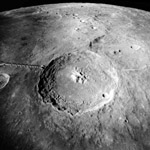
THE MOON
The lunar environment is extreme. With no atmosphere the team will be exposed to solar particle events that could literally fry them. Intense ultraviolet radiation will degrade materials. Temperatures could range from minus 170 to plus 110 degrees centigrade depending on whether they are in light or dark. They will be completely dependent on life support systems to survive.
The total distance of a Trans-Lunar expedition is approximately 11,000 kilometres and could take weeks depending on troubles encountered crossing craters. The team may also have to endure periods of complete darkness and periods of complete light as the lunar day is just over 27 days long. They could choose to follow the sunlight around the lunar surface.
CLAIMING THE AWARD
This award was first offered by the Foundation in 1994 and can be claimed by completing a circumnavigation of the lunar surface. Any route around the Moon can be chosen, equatorial or polar.

MOON VITAL STATISTICS
- Equitorial Distance: 3,476 km
- Length of Day: Just over 27 days
- Mean Distance from Earth: 384,400 km.
- Surface Gravity: One sixth of Earth’s
- Prominent Features:
- Mare Criseum (plain)
- Ptolemaeus (crater)
- Copernicaus (crater)
- Appenninus (mountains)
- Length of Day: Just over 27 days
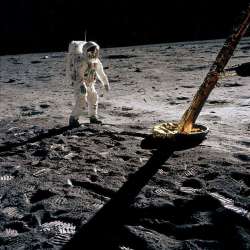
SUCCESSFUL HUMAN EXPEDITIONS
- Apollo 11: 1969 (USA)
- Apollo 12: 1969 (USA)
- Apollo 14: 1971 (USA)
- Apollo 15: 1971 (USA)
- Apollo 16: 1972 (USA)
- Apollo 17: 1972 (USA)